

Learn Microsoft Intune Autopilot deployment strategies from Microsoft's Cloud Solutions...Continue
Washington DC’s rapid response IT support with complete incident resolution and round-the-clock security monitoring—not just alerts.
Military-grade protection that scales with you, that’s
The Power of One.
Frequently Asked Questions
While Multi-Factor Authentication (MFA) verifies identity during login, Zero Trust security continuously validates access throughout the entire session. Advanced Identity Verification monitors user behavior, device compliance, and access patterns to detect anomalies that traditional MFA would miss. This prevents attackers from maintaining persistence after initial compromise.
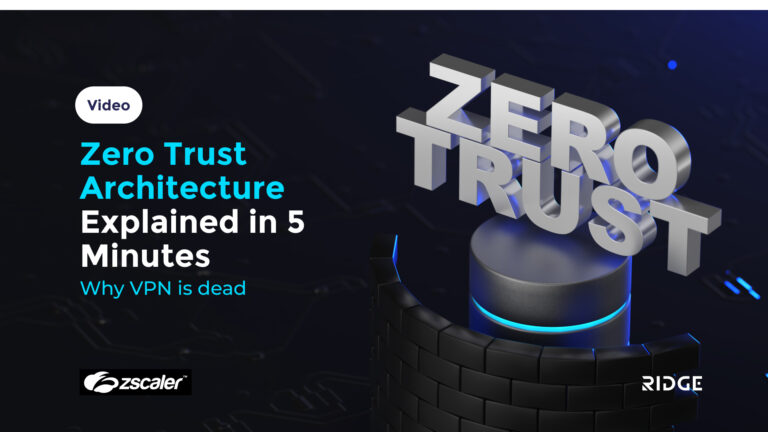
Zero Trust Architecture in simple terms is a security model where no user, device, or connection is trusted by default — regardless of whether it's inside or outside the corporate network. Every access request must be verified against identity, device health, and context before being granted, and only to the specific resource requested.
VPN not Zero Trust — the reason is architectural. VPN places authenticated users onto the corporate network, granting broad access rather than application-specific access. It creates an exposed attack surface, enables lateral movement, and allows network-wide enumeration. Zero trust architecture, by contrast, keeps users off the network entirely and makes applications invisible to the internet
Going dark cybersecurity means making your entire infrastructure invisible to the public internet — no exposed IP addresses, no listening ports, no discoverable attack surface. Using Zscaler's inside-out connectivity model, internal applications become completely unreachable unless a user has been verified through the Zero Trust Exchange, eliminating the attacker's ability to perform reconnaissance entirely.
Zero trust employee off-boarding is the process of immediately revoking all system access when employees leave your organization. Unlike traditional security models, it eliminates security gaps through identity-based access control.
When you disable a departing employee's account, zero trust employee off-boarding instantly revokes access to:
Traditional off-boarding often leaves former employees with lingering access through forgotten systems, shared credentials, or cached authentication tokens. We prevent this by requiring continuous identity verification for every access request—no valid identity means zero access across your entire environment.
The advantage: Complete access termination in seconds, not days or weeks.
Our protocols ensure clean separation, CMMC compliance for DoD contractors, and elimination of insider threat risks from departing personnel.
Saft Batteries
Learn Microsoft Intune Autopilot deployment strategies from Microsoft's Cloud Solutions...Continue

60% of SMBs close within 6 months of a cyberattack—disaster...Continue

Why 60% of Attacked SMBs Close Within 6 Months—And the...Continue

Your Roadmap to SPRS Scores, C3PAO Scheduling & FedRAMP CMMC...Continue

The Department of Defense published the CMMC Final Rule on...Continue

How to Implement Zero Trust Architecture with Military-Grade Identity-Centric Security...Continue
Learn Microsoft Intune Autopilot deployment strategies from Microsoft's Cloud Solutions...Continue
The Quantum Clock is Ticking: Why Post-Quantum Cryptography Matters Now...Continue
Rapid response times, with around the clock IT support, from Inc. Magazine’s #1 MSSP.