Modern businesses communicate across multiple platforms, each creating potential entry points for sophisticated attacks. While email security blocks traditional phishing, attackers target unprotected channels like social media, sms and recognized cloud utilities like Docusign.
AI security for SMBs differs from traditional cybersecurity in four critical ways:
Most critically, AI security for SMBs recognizes that 83% of SMBs face increased threats but traditional tools like basic antivirus (used by 68% of SMBs) are inadequate against AI-powered attacks.
Detecting compromised AI security for SMBs requires monitoring for specific warning signs: unexplained network traffic increases (especially to unusual geographic locations indicating data exfiltration), system performance degradation without obvious cause, unusual login attempts or authentication failures, vendor security notifications about your IP address appearing in threat intelligence, alerts from managed security providers about anomalous behavior, and employees reporting unusual system behavior.
The challenge for AI security for SMBs is that AI-powered attacks often operate stealthily—average breach discovery time is 207 days for SMBs without managed security versus 3-6 hours with 24/7 monitoring. If you suspect compromised AI security for SMBs, immediately contact a cybersecurity incident response team rather than investigating internally, as self-investigation may alert attackers or destroy forensic evidence needed for recovery and insurance claims.
Effective AI usage policies are foundational to AI security for SMBs. Your policy should specify:
AI security for SMBs requires these policies that cost $0 to implement but prevent shadow AI usage that caused one 75-employee SMB to lose $6.7M.
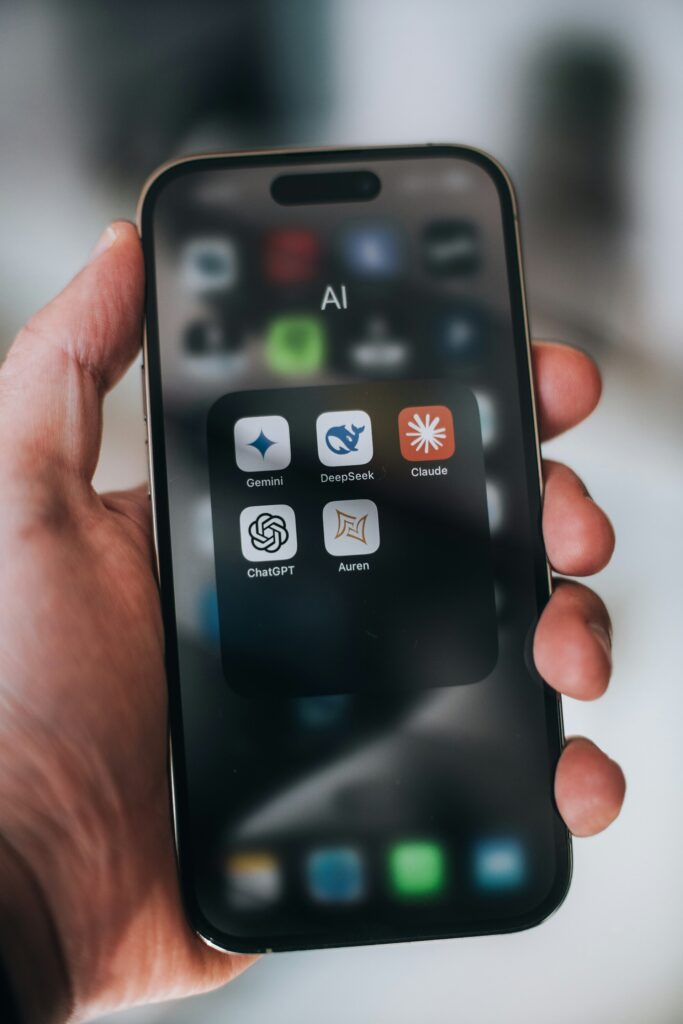
Slopsquatting attacks exploit AI hallucinations to compromise AI security for SMBs by weaponizing fake software packages. When developers at SMBs use AI coding assistants like ChatGPT, GitHub Copilot, or Claude, these tools sometimes recommend packages that don't exist—19.7% of AI recommendations according to university research.
Cybercriminals monitor which fake packages AI models consistently hallucinate, then register those package names (like "hipaa-auth-validator" or "mysql-async-connection-pool-pro") and upload malware-laden code. Developers trust the AI recommendation and install the package, compromising AI security for SMBs. This threat specifically targets SMBs because Fortune 500 companies have security teams reviewing dependencies, while SMBs typically don't. Slopsquatting attacks often remain undetected for months at SMBs without 24/7 monitoring.
AI security for SMBs costs significantly less than breach recovery. Industry averages for managed security services range from $36,000-$48,000 annually for SMBs with 10-50 employees, $60,000-$96,000 for SMBs with 50-200 employees, and $96,000-$180,000 for SMBs with 200-500 employees. Compare this to the average AI-powered breach cost of $254,445 for SMBs, with 60% of breached SMBs closing within 6 months.
Real examples show AI security for SMBs preventing catastrophic losses: a 50-employee healthcare SMB lost $3.2M from a slopsquatting attack, a 200-employee manufacturer lost $4.5M from AI-hallucinated malware, and a 75-employee professional services firm lost $6.7M from shadow AI usage. One prevented breach pays for 2-7 years of AI security for SMBs.

Today's threat landscape extends far beyond traditional email phishing. Attackers are increasingly targeting messaging apps (Slack, Teams, WhatsApp), social media platforms (LinkedIn, Facebook), SMS/text messaging, collaboration tools, and even calendar invites. These channels often lack the robust security controls found in email systems, creating dangerous blind spots. Our military-grade security platform delivers comprehensive protection across all communication channels, not just email.
The stakes couldn't be higher as attack patterns evolve dramatically. In one recent incident documented by SlashNext, attackers launched 1,165 emails at just 22 target mailboxes within 90 minutes—over 50 messages per user—attempting to overwhelm inboxes and trigger panic-clicking. These rapid-fire tactics create the perfect environment for follow-up attacks through alternative messaging channels, bypassing traditional email security entirely. Our military-grade protection framework identifies these cross-platform attack patterns before they can compromise your organization.
Modern security requires integrated protection across all communication channels. Our military-grade email protection extends beyond the inbox to secure the entire messaging landscape. By deploying The ONE Platform, organizations gain visibility into blind spots that traditional solutions miss. Ready to eliminate these vulnerabilities in your security architecture? Schedule your assessment today and discover how our integrated approach prevents sophisticated attacks before they start.
SMS and messaging app phishing, or "smishing," is particularly dangerous for several reasons:
In 2024, smishing attacks increased by 312%, with targeted messages often impersonating executives or IT support. Our platform's advanced threat detection identifies and blocks suspicious messages across all channels.
While sophisticated attacks are becoming harder to detect, key warning signs of non-email phishing attempts include:
Our platform's behavioral detection capabilities can identify these suspicious patterns even in sophisticated attacks.
Traditional security awareness training focuses heavily on email threats, creating dangerous blind spots. Modern training must evolve to include:
Our comprehensive training programs address the full spectrum of modern communication threats beyond traditional email security.
The stakes couldn’t be higher as attack patterns evolve dramatically. In one recent incident documented by SlashNext, attackers launched 1,165 emails at just 22 target mailboxes within 90 minutes—over 50 messages per user—attempting to overwhelm inboxes and trigger panic-clicking. These rapid-fire tactics create the perfect environment for follow-up attacks through alternative messaging channels, bypassing traditional email security entirely. In this expert cybersecurity panel, Ridge IT and SlashNext reveal how attackers are exploiting LinkedIn, SMS, and social platforms while bypassing traditional email security.
Rapid response times, with around the clock IT support, from Inc. Magazine’s #1 MSSP.
Rapid response times, with around the clock IT support, from Inc. Magazine’s #1 MSSP.